Robotic Surgery
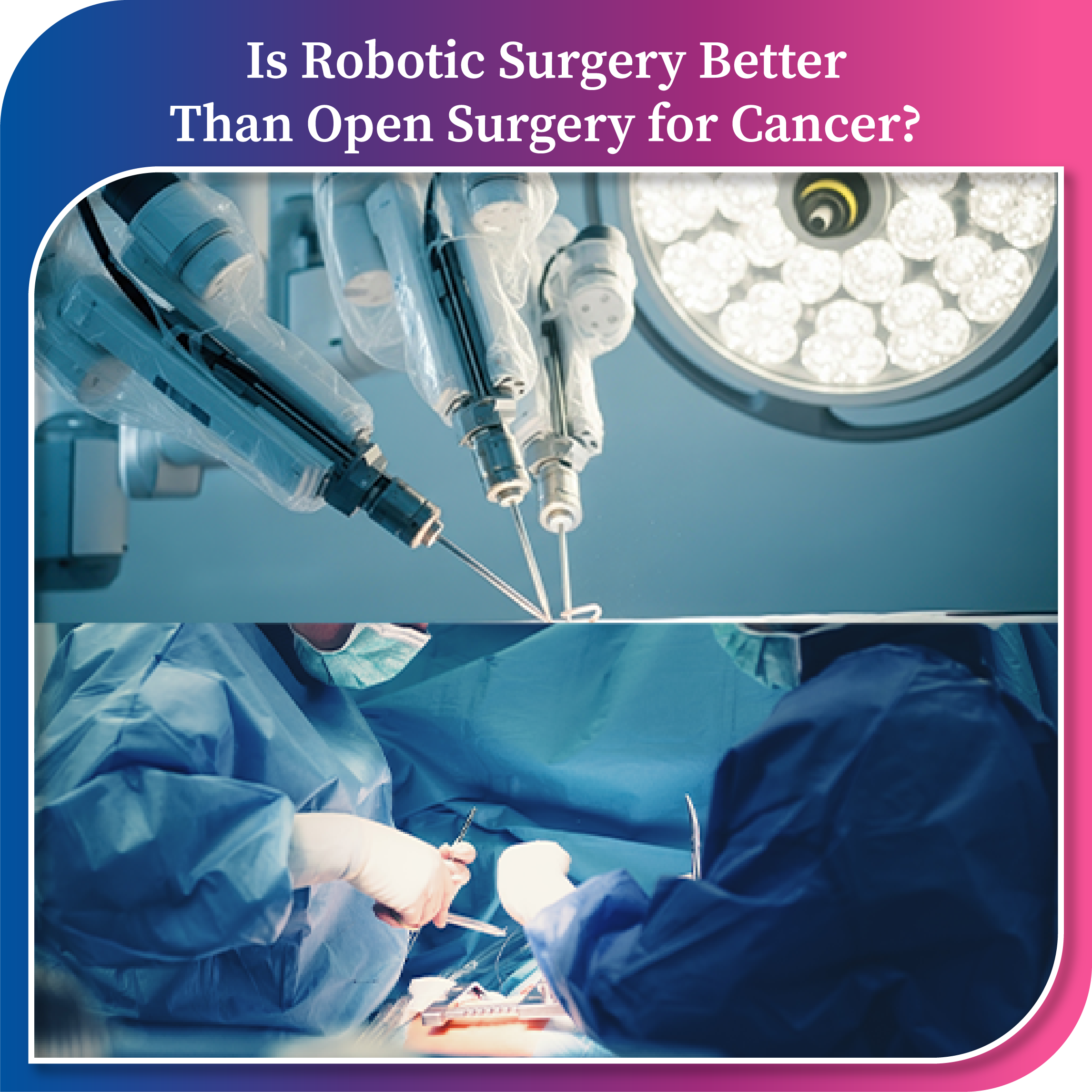
Is Robotic Surgery Better Than Open Surgery for Cancer?
Cancer treatment has come a long way in the past few decades. Earlier, when doctors needed to remove a tumor, open surgery was the only option available. This meant making a large cut in the body so the surgeon could access and remove the cancer. While this method saved countless lives, it also came with challenges like longer recovery time, more pain, and larger scars
Today, medical science has introduced a revolutionary advancement known asrobotic surgery. This modern technique allows surgeons to perform complex cancer procedures using advanced robotic technology and very small incisions.
Because of this innovation, many patients now ask an important question:
Is robotic surgery better than open surgery for cancer?
The answer depends on several factors such as the type of cancer, the stage of the disease, and the patient’s overall health. However, robotic surgery has changed the landscape of cancer treatment by offering greater precision and faster recovery for many patients.
Experts in advanced surgical oncology, including Dr Rajesh Shinde, a robotic cancer surgeon in Mumbai, often explain that understanding the differences between these two surgical approaches can help patients make informed decisions about their treatment.
How Cancer Surgery Works?
Cancer surgery is performed with one main goal: to remove the tumor from the body while preserving as much healthy tissue as possible.
In many cancers, surgery remains one of the most effective treatments. It may be used to:
- Remove the entire tumor
- Remove part of a tumor to relieve symptoms
- Prevent cancer from spreading
- Help doctors determine the stage of cancer
Traditionally, surgeons used open surgery to achieve these goals. But with advancements in technology, minimally invasive techniques like robotic surgery are now becoming more common.
What Is Open Surgery?
Open surgery is the traditional method that doctors have used for decades to treat cancer.
In this procedure, the surgeon makes a large incision in the body to reach the tumor. This allows direct access to the affected organ so the tumor can be removed.
Because the surgeon operates directly through the incision, they rely on their vision and hands to perform the procedure
Although open surgery can be very effective, it also
comes with some challenges for patients.
For example:
- The incision is larger
- There may be more blood loss
- Recovery time is longerr
- Patients may experience more pain after surgery
Despite these factors, open surgery is still necessary in certain complex cases, especially when tumors are large or have spread to surrounding structures.
What Is Robotic Surgery?
Robotic surgery is a modern and highly advanced surgical technique used in many cancer treatments today.
Despite the name, robots do not perform the surgery on their own. Instead, the surgeon controls the robotic system using a specialized console.
The robotic system consists of:
- Robotic arms that hold surgical instruments
- A high-definition 3D camera
- A surgeon’s console where the doctor controls the procedure
The surgeon sits at the console and guides the robotic arms with extremely precise movements.
Because robotic instruments are very small and flexible, they can operate through tiny incisions, making the procedure minimally invasive.
This technology allows surgeons such as Dr Rajesh Shinde, known for robotic cancer surgery in Mumbai, to perform delicate cancer operations with remarkable accuracy.
The Evolution of Minimally Invasive Cancer Surgery
Before robotic surgery became available, doctors started using laparoscopic surgery, which also involved small incisions and a camera.
However, robotic systems improved this technology even further by offering:
- Better visibility with 3D imaging
- Greater instrument flexibility
- More precise movements
- Enhanced control for the surgeon
Because of these improvements, robotic surgery is now widely used for treating many types of cancers.
Key Differences Between Robotic Surgery and Open Surgery
Understanding the main differences between these two approaches can help patients feel more confident when discussing treatment options with their doctors.
Incision Size:
One of the most noticeable differences is the size of the incision.Open surgery requires a large
incision to access the tumor, while robotic surgery uses multiple small incisions.
Smaller
incisions usually mean:
- Less tissue damage
- Reduced scarring
- Faster healing
Surgical Precision: Robotic systems provide surgeons with magnified 3D views of the surgicalarea, allowing them to see tiny structures like nerves and blood vessels clearly. This can be particularly useful in complex cancer surgeries where precision is critical.
Blood Loss : Another difference is the amount of blood loss during surgery.Because robotic surgery uses small incisions and precise instruments, blood loss is often significantly lower compared to traditional open surgery
Recovery Time: Patients who undergo robotic surgery often recover more quickly.Many people are able to
- Leave the hospital sooner
- Return to normal activities earlier
- Experience less discomfort during recovery
robotic surgery often recover more quickly.Many people are able to
This is one reason why minimally invasive cancer surgery in Mumbai and around the world is becoming increasingly popular.Benefits of Robotic Surgery for Cancer Patients
The growing popularity of robotic surgery is largely due to the benefits it offers patients.
Less Pain After Surgery: Because the incisions are smaller, patients usually experience less painafter robotic surgery compared to open surgery.This means they may need fewer pain medications during recovery.
Faster Healing: Smaller surgical wounds heal faster, allowing patients to recover more comfortably.Many patients are able to return to daily routines sooner.
Reduced Risk of Infection: Large surgical wounds can increase the risk of infection.With robotic surgery, the smaller incisions reduce exposure and help lower this risk.
Better Cosmetic Results: Smaller incisions also result in smaller scars, which can be important for many patients.
When Open Surgery May Still Be Necessary?
Even though robotic surgery offers many advantages, it is not always the best choice for every situation.
There are cases where open surgery may still be recommended.
For example:
- Very large tumors
- Cancer that has spread extensively
- Situations where reconstruction of tissues is required
- Emergencies requiring immediate access to organs
In such cases, open surgery allows surgeons to manage complex conditions effectively.
What Patients Should Consider Before Choosing Surgery?
When deciding between robotic surgery and open surgery, patients should consider several important factors.
This may include:
- Stage of Cancer: Early-stage cancers are often more suitable for minimally invasive approaches.
- Overall Health: A patient’s medical condition, age, and overall health can influence which surgical method is recommended.
- Surgeon’s Expertise One of the most important factors is the experience of the surgeon.Robotic surgery requires specialized training and expertise, so choosing a skilled surgical oncologist is essential.
The Role of Technology in the Future of Cancer Treatment
Technology continues to transform the way cancer is treated.
Robotic surgery is only one example of how innovation is improving patient care.
In the future, we may see:
- Artificial intelligence assisting surgeons
- More advanced imaging during surgery
- Personalized surgical planning
- Even more precise robotic systems
These developments will continue to make cancer treatment safer and more effective.
A Balanced Perspective on Robotic vs Open Surgery
When comparing robotic surgery and open surgery, it is important to remember that both
methods have their place in cancer treatment.
Robotic surgery offers clear advantages in many cases, particularly when minimally invasive
techniques are appropriate.
However, open surgery remains a vital option for certain complex conditions.
The best approach is always determined by a thorough medical evaluation and discussion between the
patient and their surgeon.
Specialists such as Dr Rajesh Shinde, known for performing advanced robotic cancer surgery inMumbai,
emphasize the importance of choosing the treatment that provides the safest and most effective
outcome for each individual patient.
The question of whether robotic surgery is better than open surgery for cancer does not have a
single answer for everyone.
What is clear, however, is that robotic technology has significantly improved the way many cancer
surgeries are performed.
With greater precision, smaller incisions, and faster recovery, robotic surgery has become an
important advancement in modern cancer care.
At the same time, traditional open surgery continues to play a crucial role in complex cases.
For patients facing cancer surgery, understanding these options can help them feel more informed and
empowered when making treatment decisions.
With experienced specialists, advanced technology, and personalized care, the future of cancer
surgery is more promising than ever.